RADIANT — TOKYO
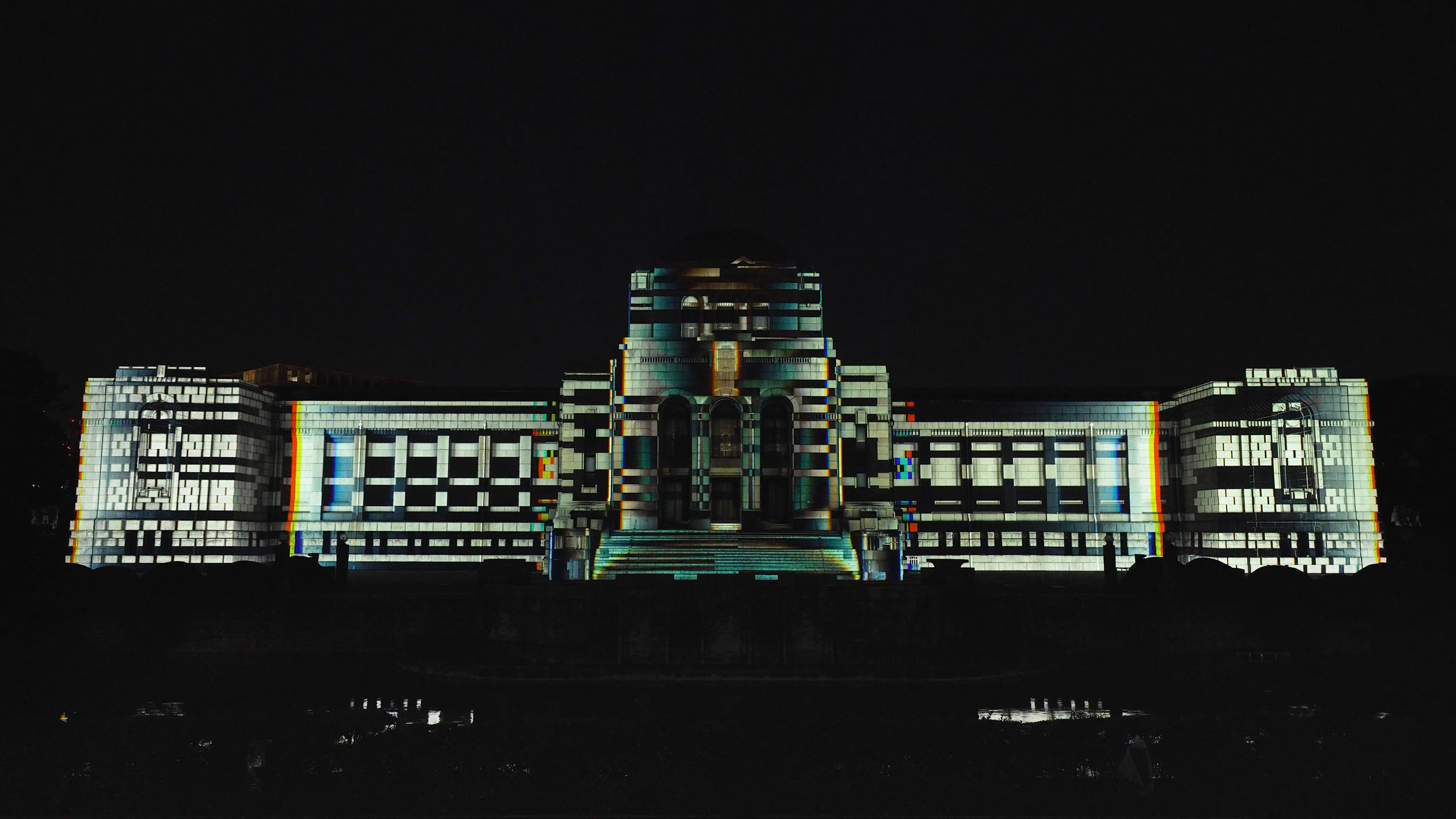
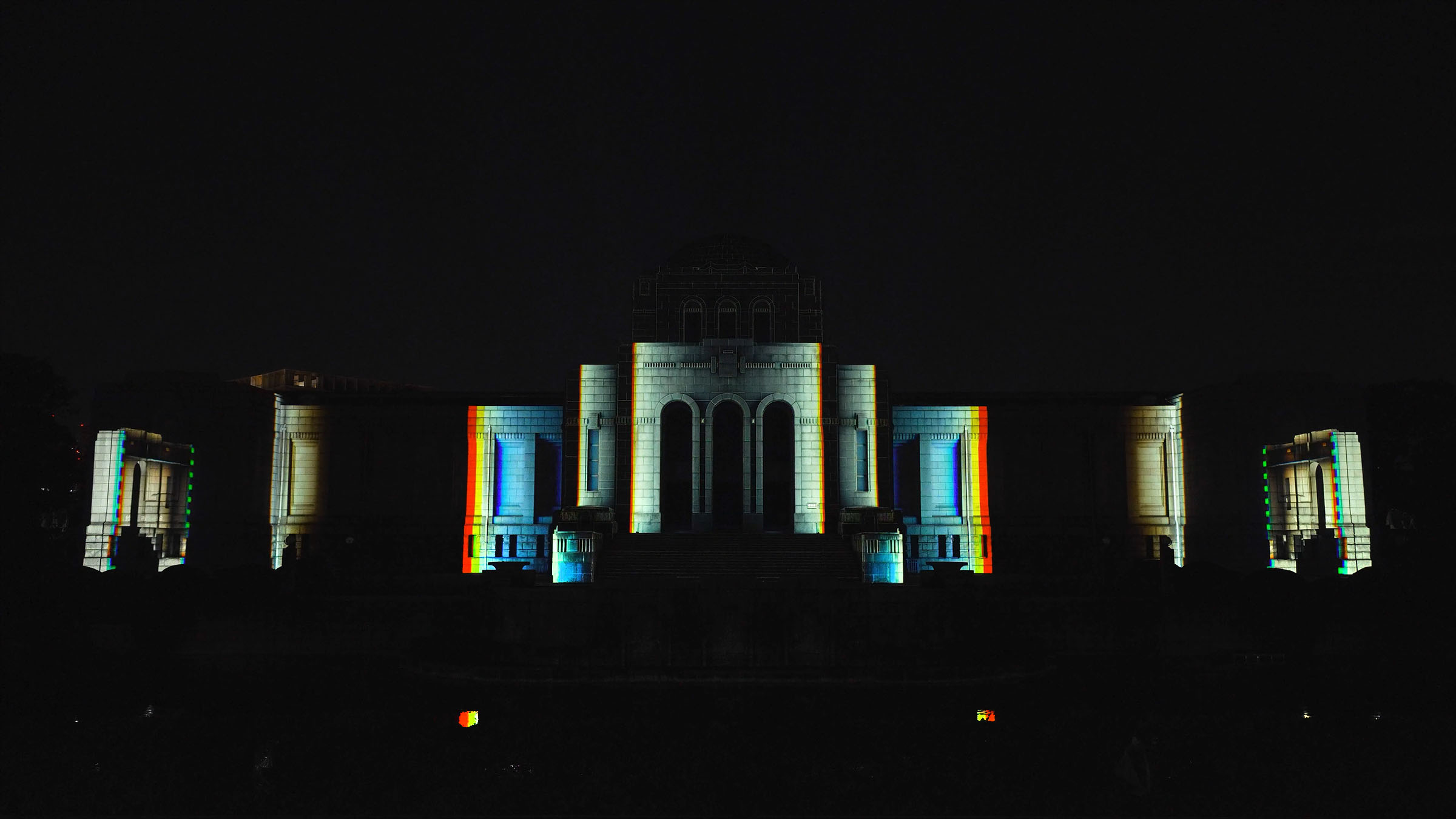
Radiant starts from a simple contradiction: light defines everything we see, but it stays invisible until it hits a surface. In Tokyo, the Memorial Picture Gallery becomes that surface. The facade isn't used as a screen. Instead, it responds to light as if it were pressure or impact, turning illumination into something active rather than just an image placed on top.
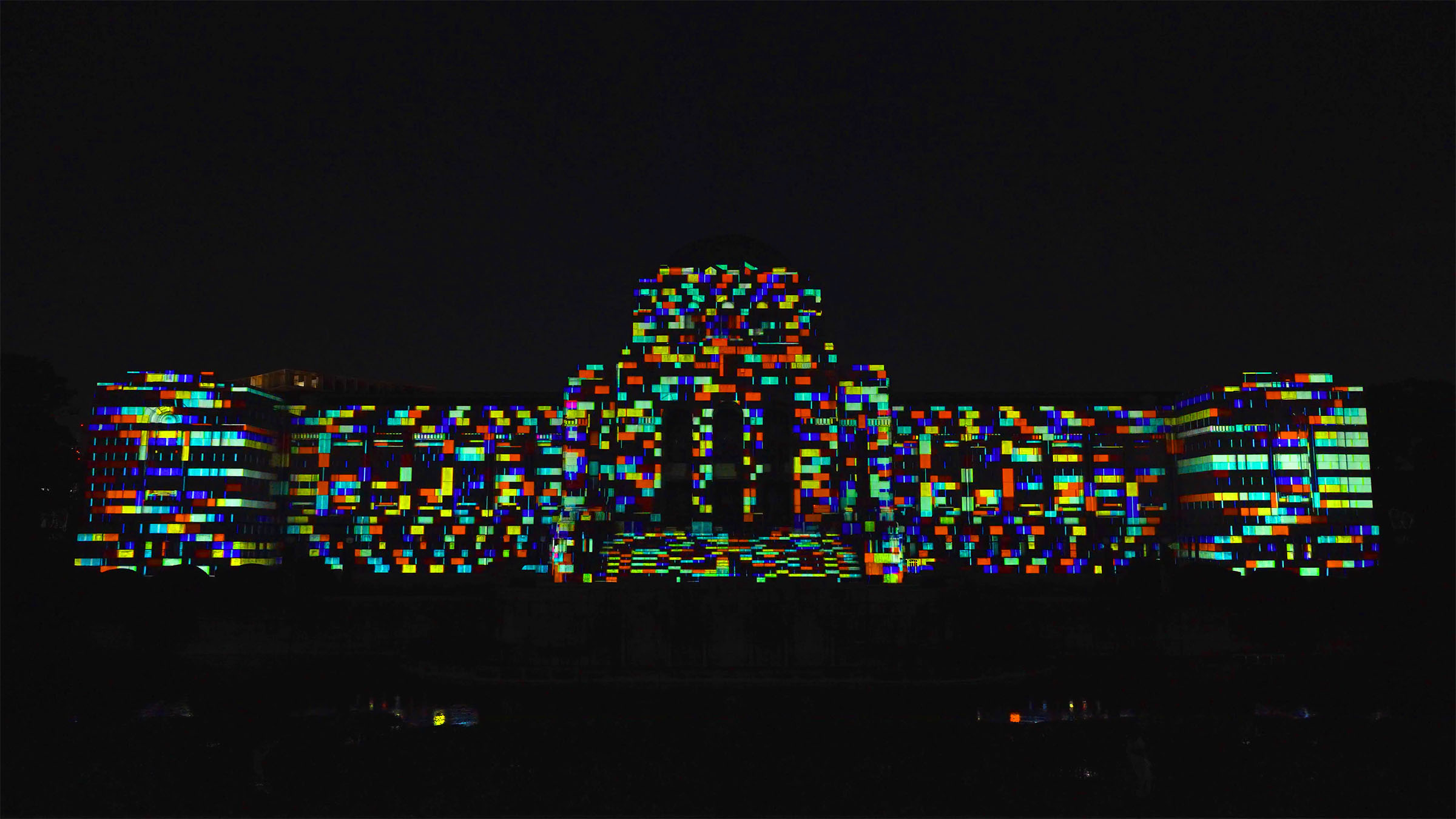
Most of the visual language is restrained: monochrome geometry, sharp edges, controlled negative space. Then it breaks into chromatic shifts, color splitting and brief aberrations that look like refraction made visible. The work moves between intensity and stillness, testing how little it needs to completely change how you see a familiar building.
RADIANT — INTERVALS FESTIVAL
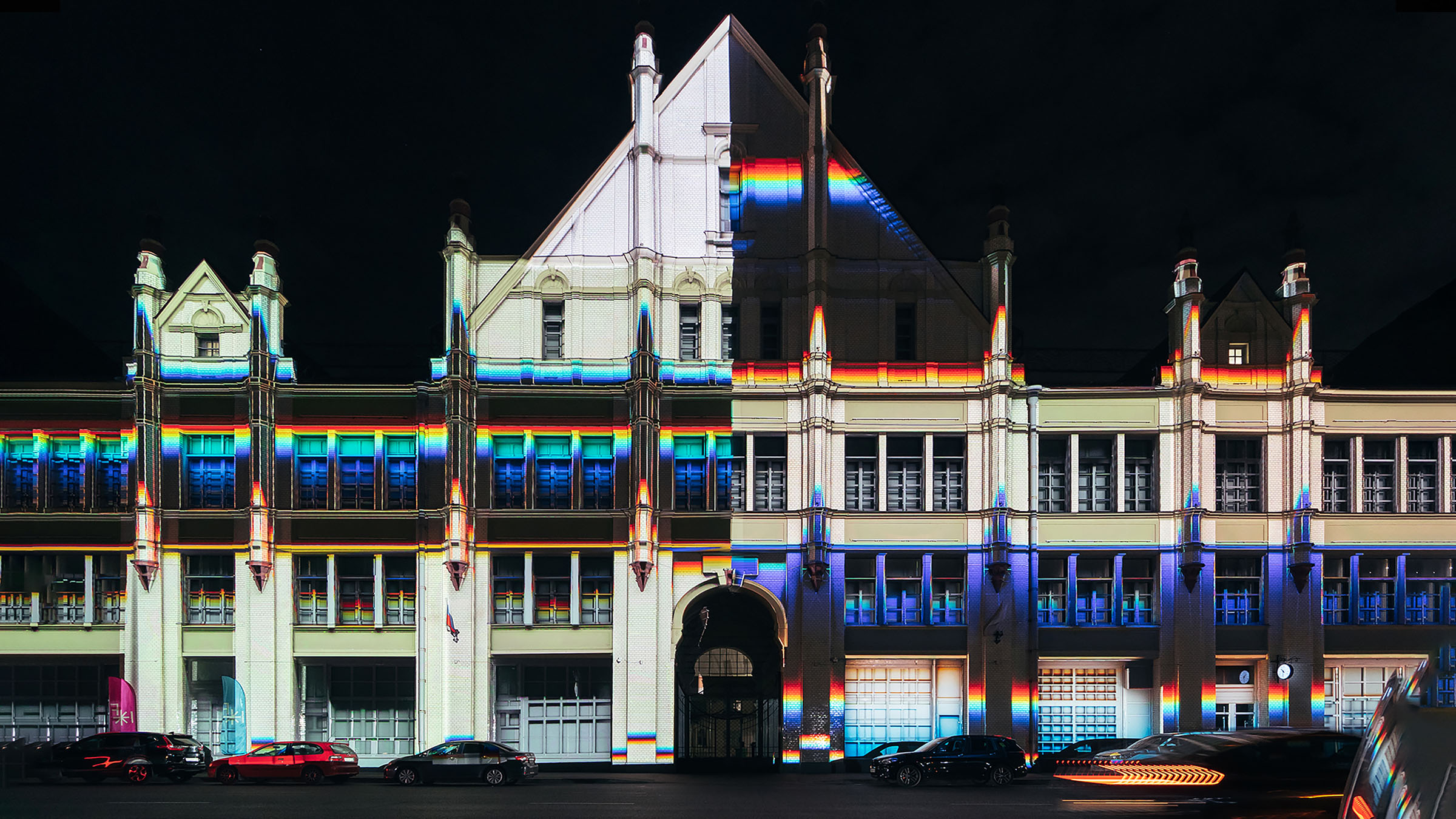
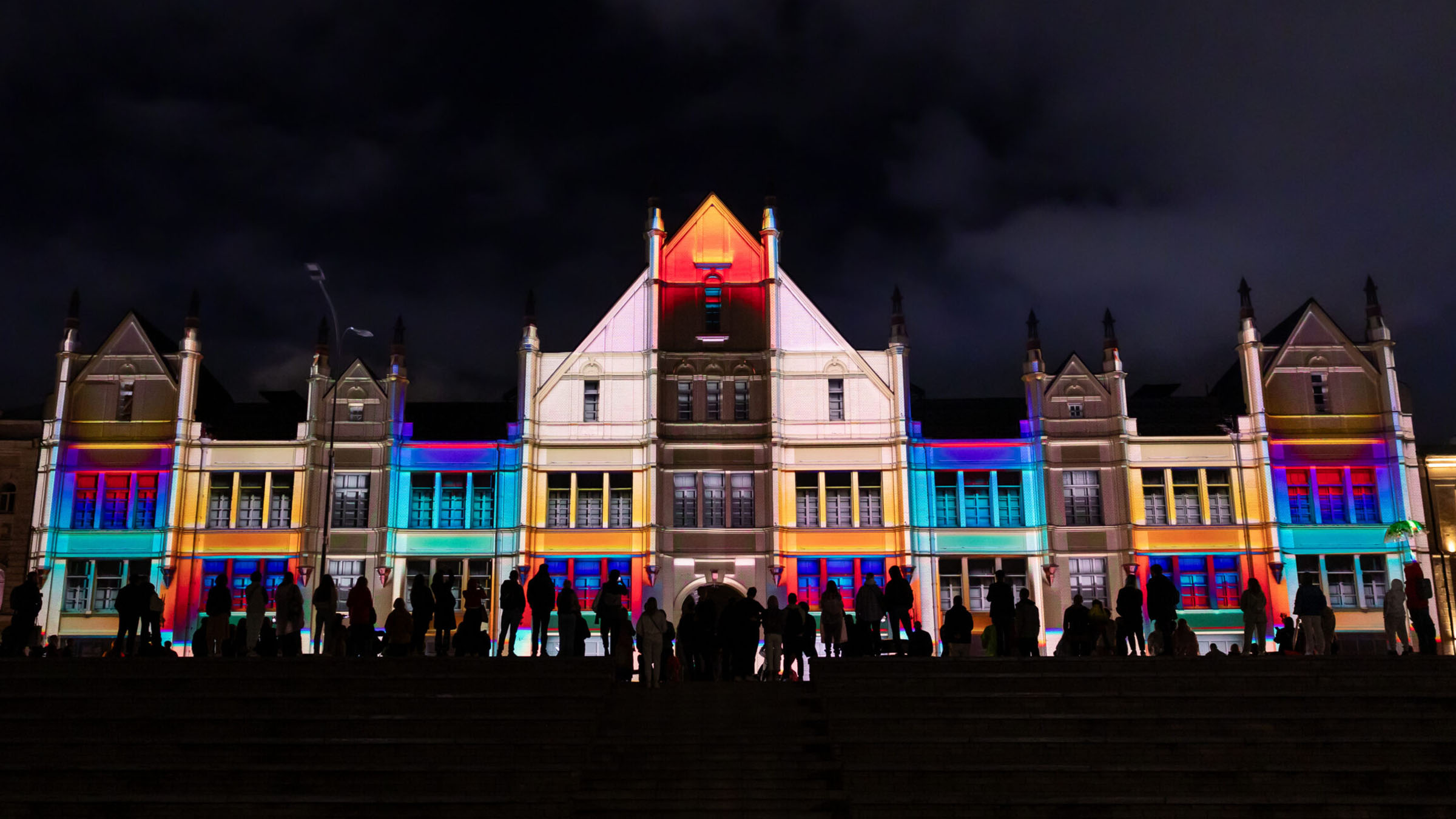
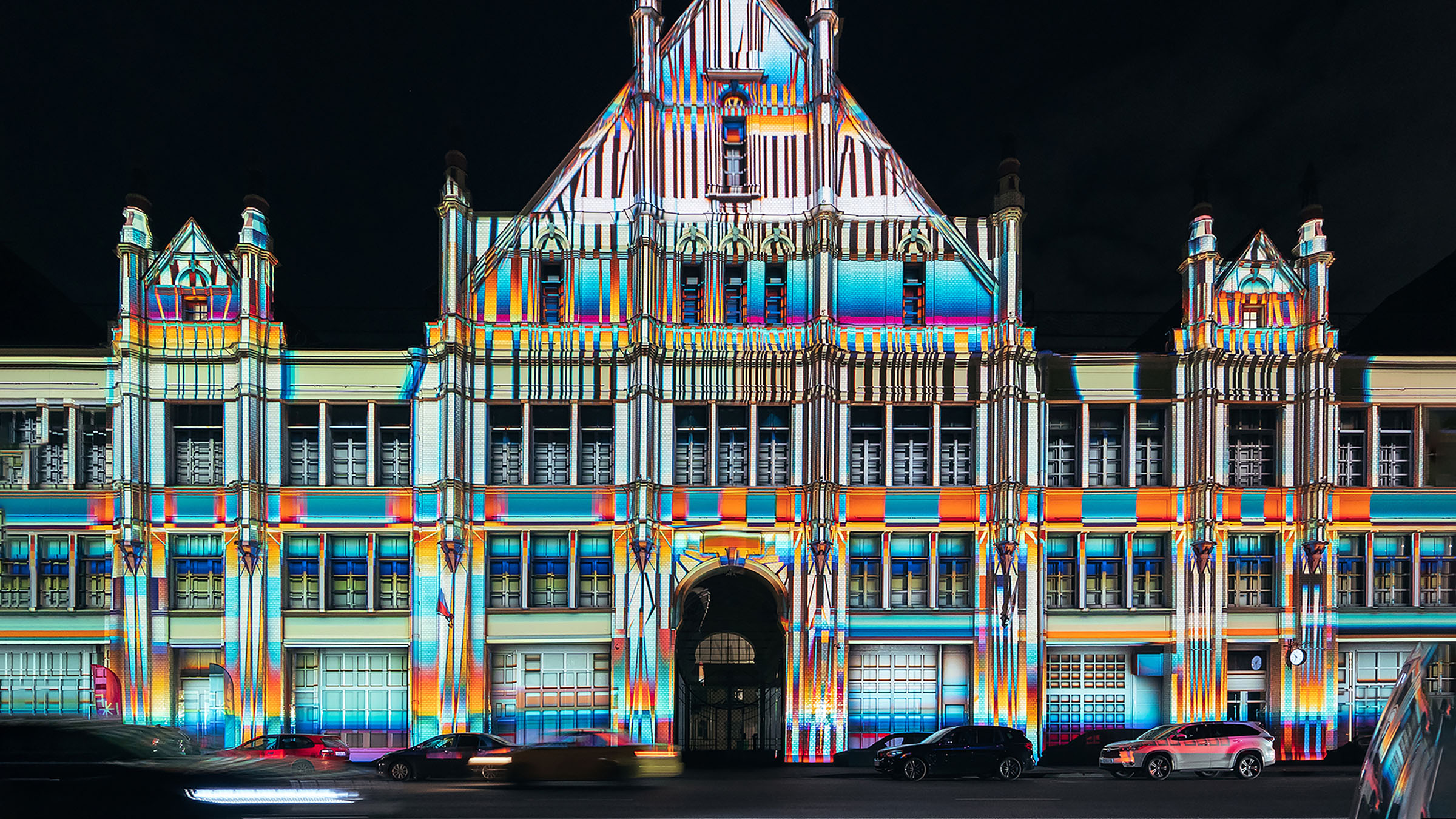
The Nizhny Novgorod version leans more into scale and atmosphere. The same generative logic slows down in places, letting depth build across the wider facade, while faster passages sharpen the architecture into something like an instrument that measures, slices, and reorganizes its own surface. The mapping doesn't decorate the building. It treats it as a structure that can be re-read through energy and rhythm.
Sound ties both versions together: a contemporary electronic score that follows the geometry and reinforces the connection between system and site. Radiant is a digital collage of CGI, generative artifacts, and controlled errors, built as a reminder that what we call reality is just invisible forces colliding with matter.