VOLUMEN GENIUS LOCI WEIMAR
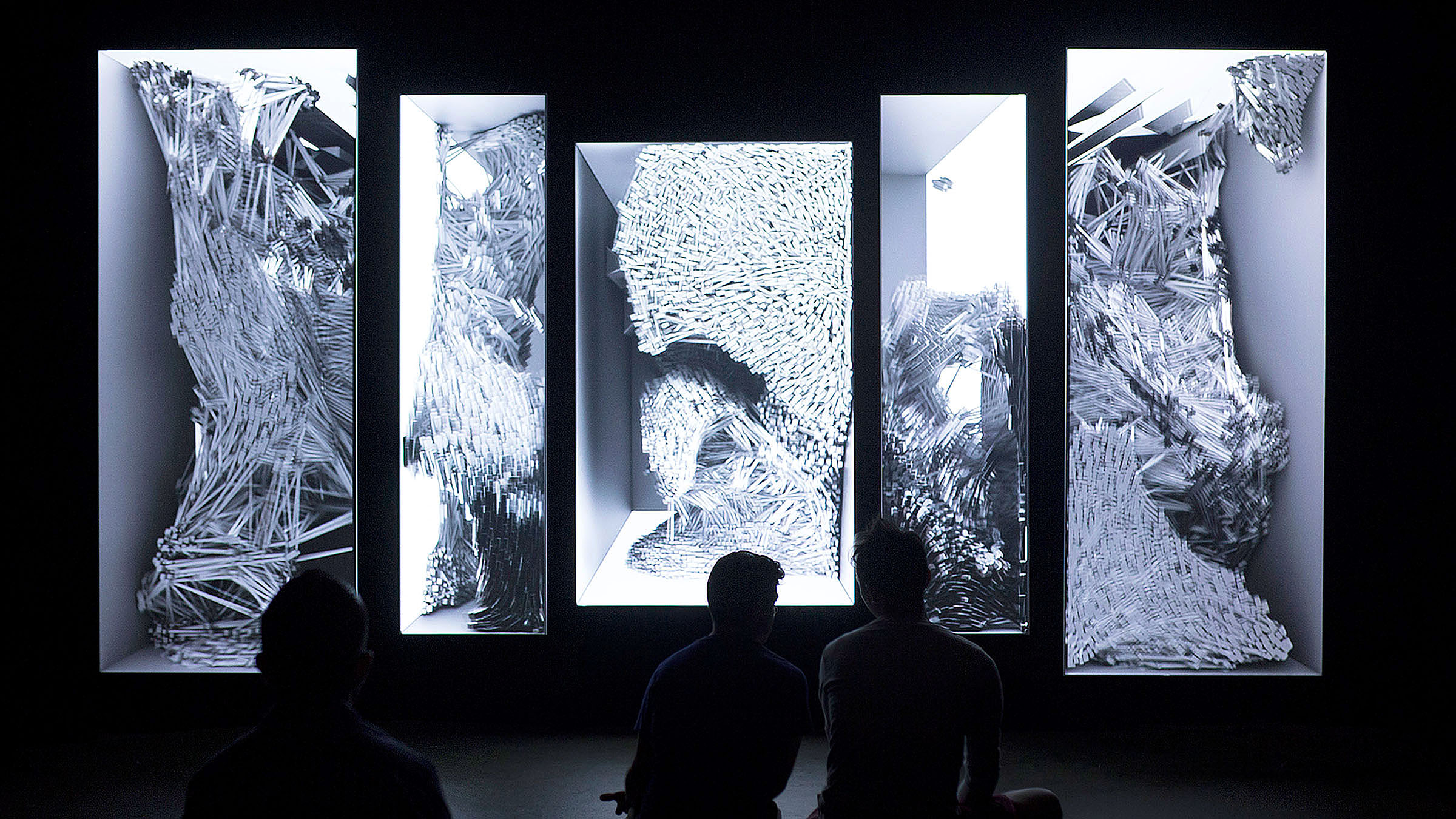
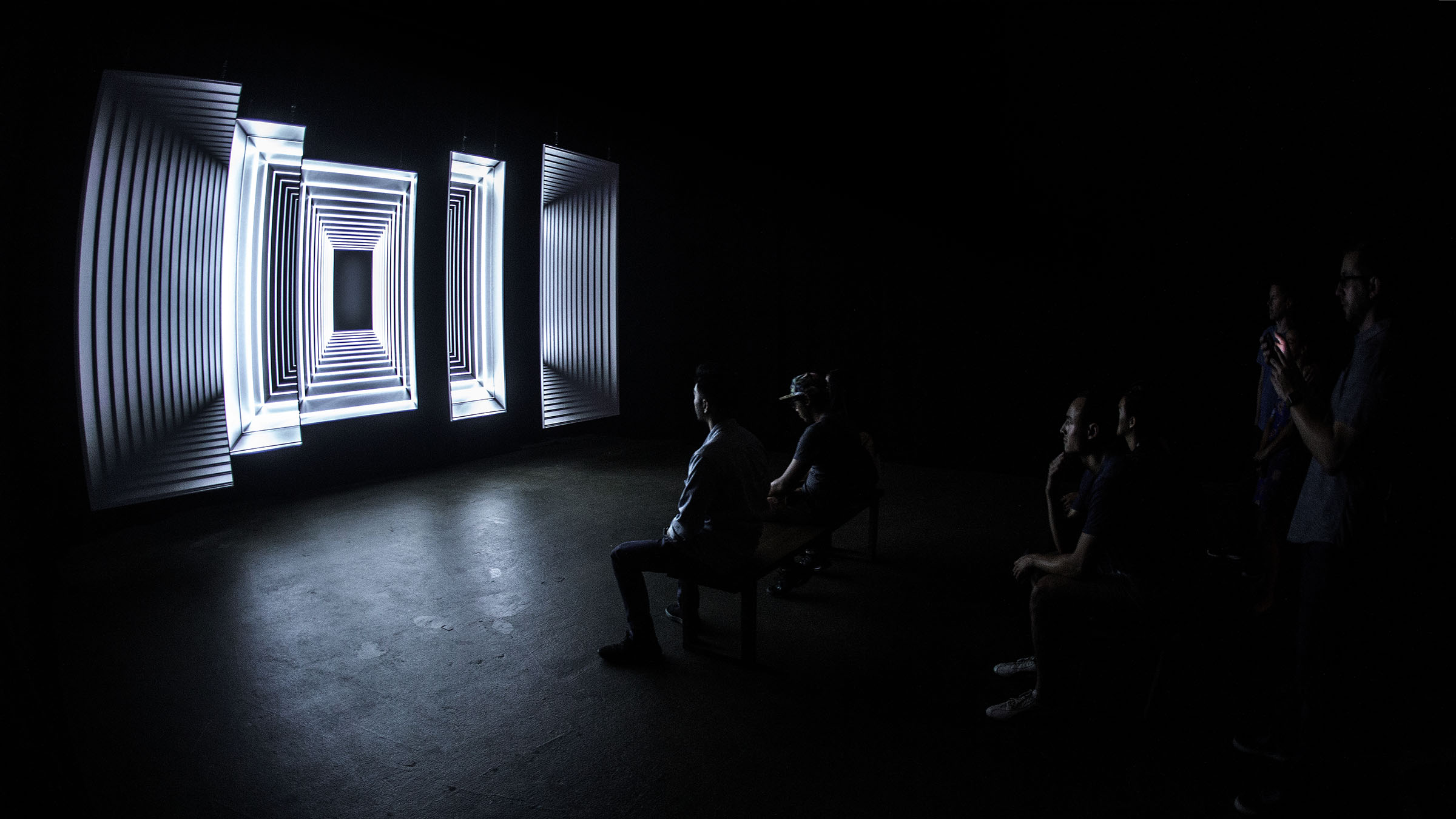
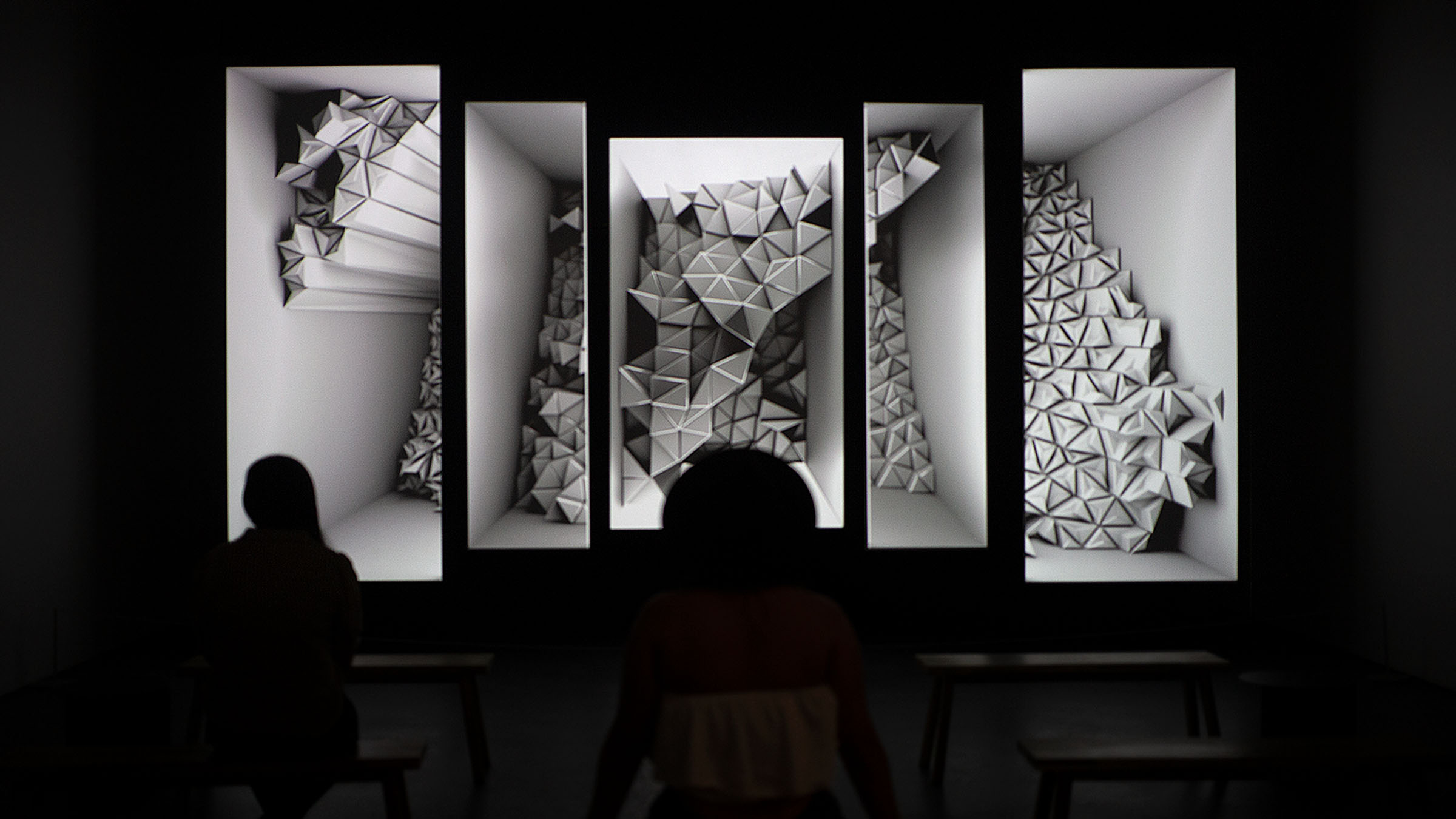
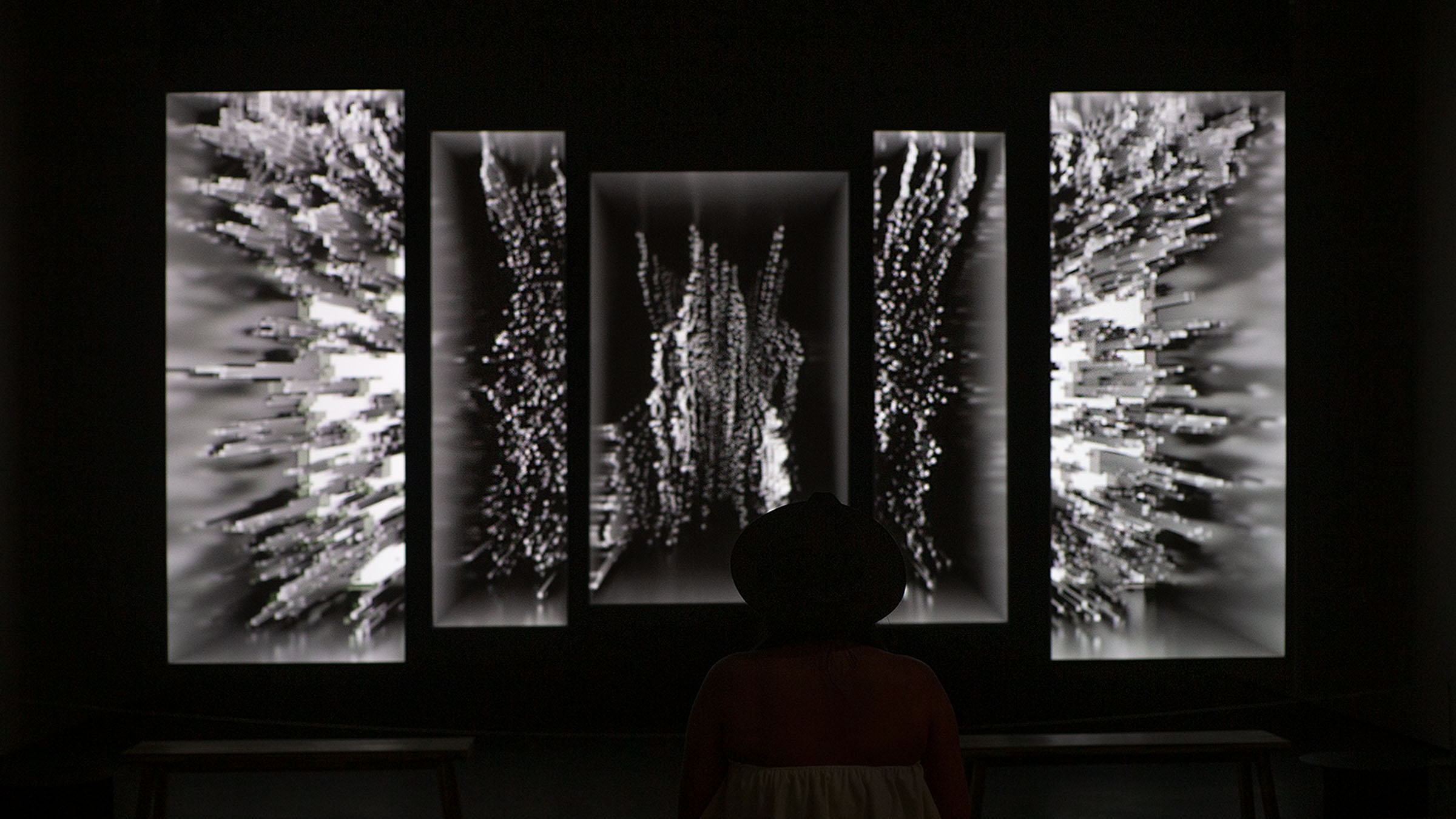
Volumen is an audiovisual installation focused on the behavior of three-dimensional forms within a confined architectural space. Developed for Genius Loci Weimar, the work uses a physical arrangement of panels placed at varying depths to construct optical illusions that destabilize the perception of volume. What emerges is an abstract narrative moving through altered states of matter, distorted physical laws and slow, hypnotic simulations.
By fragmenting visuals across planes of different scales, the installation blurs the line between what is physically present and what is perceptually constructed. Light and sound act as spatial forces, reshaping the void and revealing latent tension. Rather than illustrating space, Volumen activates it, treating light as a material capable of shifting perceived weight, depth and presence.
VOLUMEN — WONDERSPACES SAN DIEGO
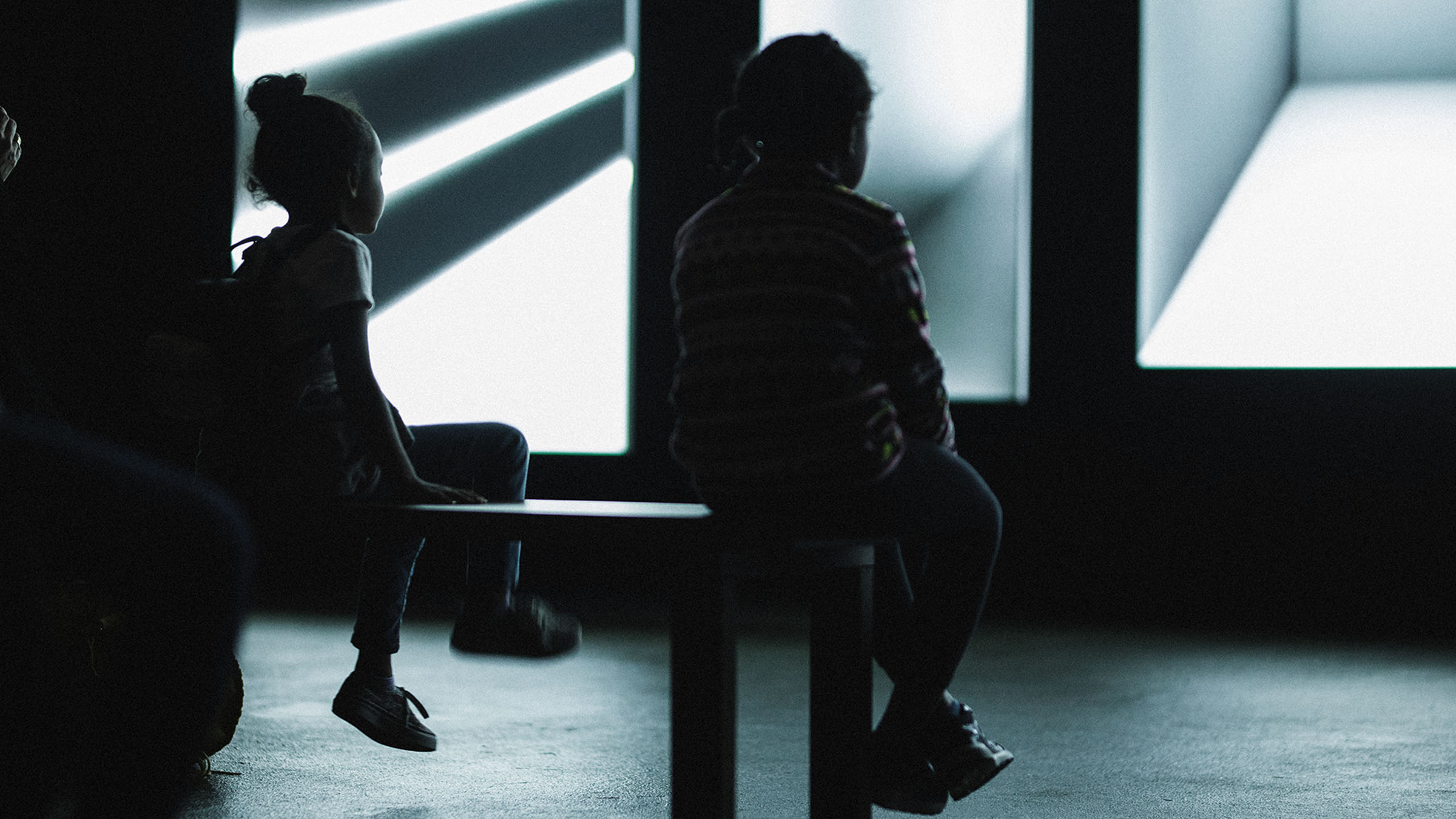
Presented at Wonderspaces San Diego, Volumen translates its core principles into an immersive, audience-driven context. The work explores how light, sound and geometry can simulate volume beyond physical mass, guiding perception through layered illusions and rhythmic transformations. Fragmented structures unfold across surfaces, inviting viewers to move between clarity and disorientation.
Mathematical simulations become sensory events. Light turns particulate and sculptural, while sound reinforces spatial pressure and release. Within this environment, Volumen looks at the hidden energy embedded in objects and forms, and how perception itself can be tuned to transform an architectural space into a visceral field.
VOLUMEN — WONDERSPACES ARIZONA
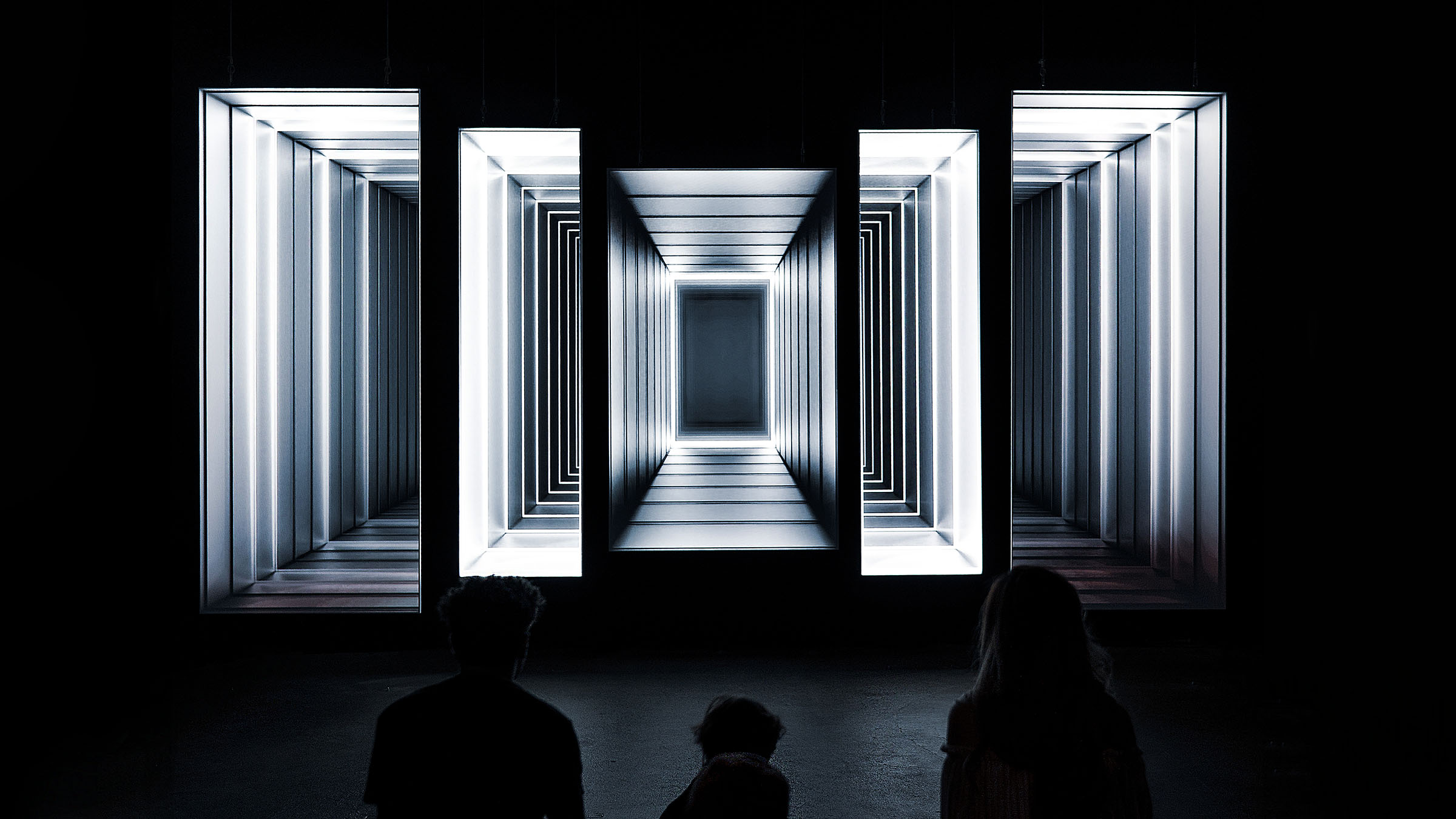
Presented at Wonderspaces Arizona, Volumen returns to its five-panel configuration for a gallery audience. Light is handled as material rather than illumination: particulate in one passage, sculptural in the next, assembling volumes that carry no mass and dissolve as soon as they resolve.
Sound moves with the image rather than beneath it, tightening and releasing the space around the viewer. The panels do not depict depth so much as manufacture it, and the room reorganises itself each time the cycle turns.